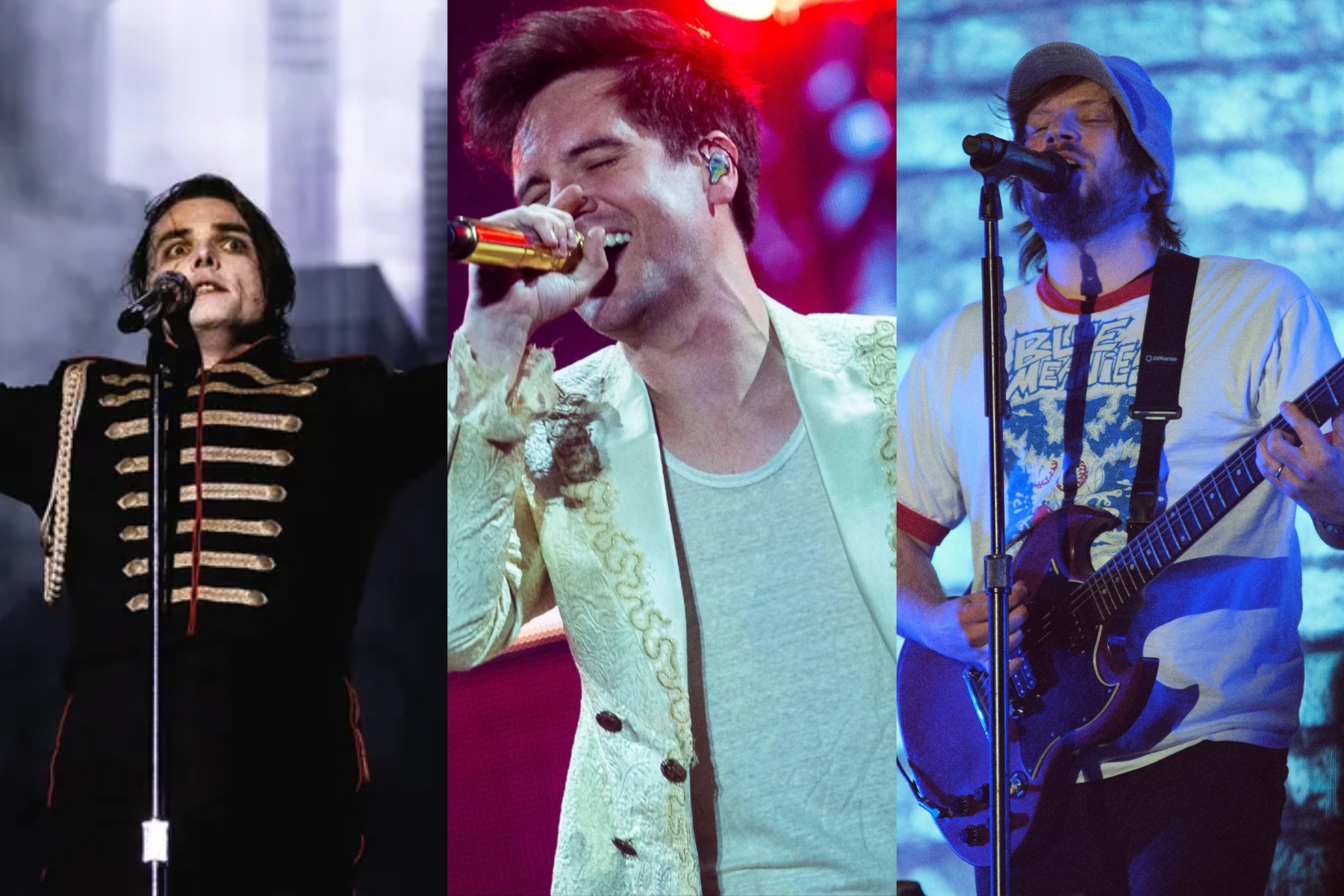
By April, spring has sprung! And when it comes to rock and alternative artist birthdays, April is about as stacked a lineup as it gets. I mean, seriously, three pillars of the emo holy trinity land here, alongside voices that have shaped alternative, rock, emo, and pop-punk across generations.
Hayley Kiyoko — April 3, 1991
Hayley Kiyoko didn’t wait for space in pop—she made it. Centering queer women in her work with clarity and intention, she gave fans something that felt long overdue. The “Lesbian Jesus” title stuck for a reason.
Rob Damiani (Don Broco) — April 5, 1989
Rob Damiani runs Don Broco at full speed. Genre lines blur—pop, rock, electronic—and the band thrives in that chaos. Few acts in the UK scene feel this unpredictable and this locked in at the same time.
Max Bemis (Say Anything) — April 6, 1984
Max Bemis says everything most people won’t. Through Say Anything, he pushed conversations around mental health into the open—messy, unfiltered, and impossible to ignore.
Matty Healy (The 1975) — April 8, 1989
Matty Healy keeps The 1975 in motion. Every release shifts—sonically and visually—while still landing at scale. He’s reacting in real time, and the band moves with him.
Gerard Way (My Chemical Romance) — April 9, 1977
Gerard Way built something bigger than a band with My Chemical Romance. The visuals, the storytelling, the weight of it—it all gave people a place to exist when they didn’t have one.
Chris Carrabba (Dashboard Confessional) — April 10, 1975
Chris Carrabba made vulnerability unavoidable. With Dashboard Confessional, he put raw emotion front and center and didn’t soften it.
Brendon Urie (Panic! At The Disco) — April 12, 1987
Brendon Urie leans all the way in. Big vocals, bigger performances, and a constant shift in sound have kept Panic! At The Disco evolving without losing its identity.
Anthony Green (L.S. Dunes/Circa Survive/Saosin) — April 15, 1982
Anthony Green’s voice doesn’t sit still. Across Circa Survive, Saosin, and L.S. Dunes, it stretches, cracks, and carries everything with it.
Robert Smith (The Cure) — April 21, 1959
Robert Smith made mood a language. The Cure moves between light and dark without choosing one, and that balance still echoes across alternative music.
MGK (Machine Gun Kelly) — April 22, 1990
Love him or hate him, MGK shifted lanes and didn’t look back. His move into pop-punk brought a new audience with it and forced the conversation around genre to loosen up.
Kellin Quinn (Sleeping With Sirens) — April 24, 1986
Kellin Quinn’s voice cuts straight through. With Sleeping With Sirens, he helped open post-hardcore up to a wider crowd without dialing anything down.
Tyson Ritter (The All-American Rejects) — April 24, 1984
Tyson Ritter keeps The All-American Rejects active in the present. New music, house shows, festival runs—it doesn’t feel like a throwback.
Joe Keery (DJO) — April 24, 1992
Joe Keery didn’t treat music like a side project. As Djo, he’s building something textured and intentional, separate from everything else people know him for.
Meg Frampton (Meg & Dia) — April 26, 1985
Meg Frampton, alongside her sister in Meg & Dia, leaned into tension and melody at the same time. The songs hit without smoothing the edges.
Patrick Stump (Fall Out Boy) — April 27, 1984
Patrick Stump is the backbone of Fall Out Boy. The voice, the structure, the instincts—he helped scale the band up without losing what made it work.